Ssssssshhhhhh……!
Posted on: November 3, 2017
- In: HR | Reflection | Talent
- 6 Comments

Slowly, quietly, surprisingly, imperceptibly, the desire to write here again has come back to me. Tapping me on the shoulder, reminding me that when, as now, I am on a steep learning curve in my role, processing thoughts around how I can quickly upskill myself into a new area of expertise, deal with some as yet unchartered opportunities and some recent crushing disappointments, writing it down can be a huge help. I’m often reminded of a counter argument to blogging, that if the audience is truly only yourself, why not just open a word document and start a diary. That’s true and valid enough….and whilst I won’t be pushing these posts through twitter and other social channels – for now, at least – I do still have a quiet hope that I can engage with others, learn from them, be challenged, challenge in return and develop my thinking.
What’s new? Lots for me – a very different organisation in a very different sector from previously and, in the last couple of months, a move into a centre of excellence role, heading up Talent, away from the generalist business partnering and Head of HR roles that I have done for my whole career to date. A new chapter, both exciting and daunting. Some change on the home front too – my daughters both started secondary schools (yes, plural!) the same week that I started my new role, so it has been full on, overwhelming and a real tangible shift to a new phase. Not so much running for me lately, although that is also on my list to restart and enjoy again.
I’m reading more non-fiction, business related books than I have done for a long time, discovering the joys of podcasts and navigating new ways to learn, absorb and demonstrate new skills, knowledge, expertise, leadership. I want it to work, very much and, at the same time, I also want to work out what I want in the long-term, what my aspirations are, what’s going to make me happy at work, keep me content at home and able to continue balancing and integrating the two. More juggling, just slightly different shaped balls and a different backdrop, I guess!
I had pretty much entirely forgotten how to access this site, let alone post on it – there is still plenty to go wrong on that front! But – tentatively – it’s nice to be back writing and sharing thoughts and who knows, maybe it will become a regular thing again.
So, for anyone who is still reading and still interested….thank you. What’s new with you?
London, Baby!
Posted on: April 24, 2015
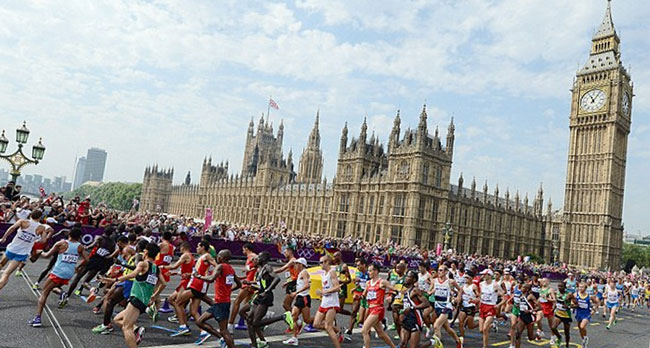
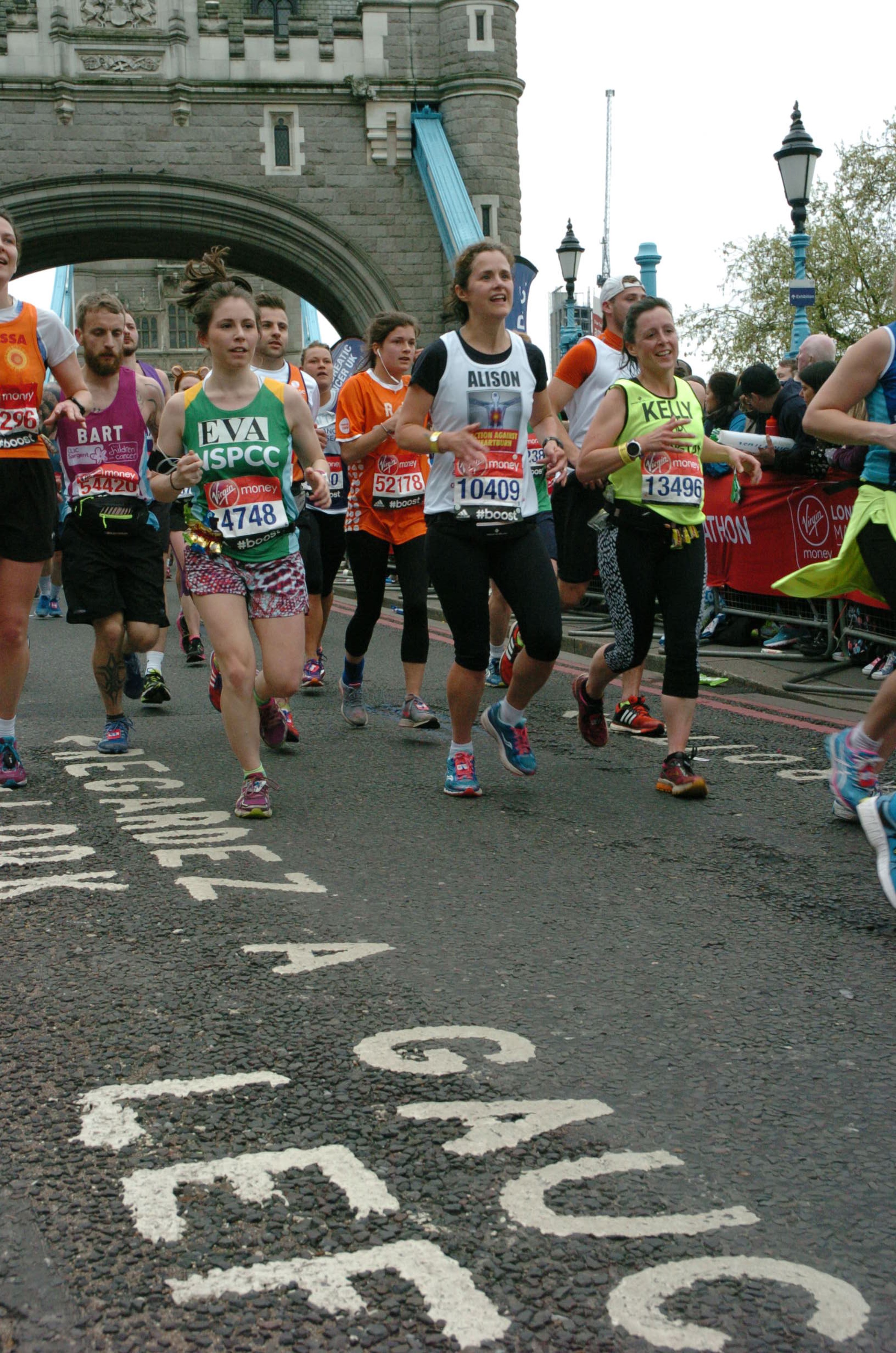
On Sunday, I’m running the London marathon! It’s been such a mix of emotions over the last few weeks and months…more than anything else right now, I feel excited, a little bit nervous and in the last few days, a bit emotional that the day is nearly here and that I really will be doing it. It’s my second marathon, having run Brighton last year with my fantastic friend, Flora.
In so many ways, the real marathon is the training itself: the early mornings, the long runs, the discipline of following a plan, committing to putting in the hours and miles consistently every week, regardless of the weather, whether you feel like doing it, the cumulative fatigue that inevitably builds up. Sunday will be when all of that hard work hopefully pays off, when I know that I have made myself a better runner over the past year through hard work, determination and relentless practice.
I’ve run over 600 miles since I started training at the end of last year and have had the pleasure of running in the Aviemore snow, along the banks of the Seine in Paris, past the Sydney Opera House and in the heat of the Perth sunshine, with wild kangaroos bounding just metres away from me in the national park trails. How lucky am I to be healthy and well enough to be able to run, let alone run long distances, to do so with friends and to participate in one of the most iconic races in the world?!
There will be times when it gets tough on Sunday, when my body hurts, when my head screams at me that it’s a ridiculously stupid activity and when all I want to do is stop. I’m going to do my best though to keep on keeping on, to keep moving and to keep running towards that amazing finish line.
This year, I’m running for a small group of charities called Action Against Heartburn, promoting early diagnosis of oesophageal cancer. It is a charity that my Dad has worked tirelessly for over the years, since his own oesophagus ruptured 14 years ago. You can read more about why I am running for them here and if you would like to sponsor me for this endeavour I would appreciate it hugely.
So, that’s it! One more tiny tapering run today and then it’s London, baby! Bring. It. On!
*********UPDATE*************************
I had the most amazing day running the London marathon! I absolutely loved it! I ran the first 16 miles with my good running club friend, Kelly and held a steady 9.30 min mile pace until 20 miles, when I started to tire. The absolute highlight was running over Tower Bridge, closely followed by the incredible support all the way along the route. I’ve never been quite so glad to see Big Ben right near the end and I was delighted to finish in 4 hours 20 mins and 36 seconds…a 40 minute PB from my first marathon in 2014!
I am also thrilled to have raised over £1,400 for Action Against Heartburn.
Thank you so much for your support and sponsorship, I appreciate it hugely.
Until next year…..maybe?!!
The Other Side of The Table
Posted on: December 8, 2014
- In: HR | Redundancy
- 19 Comments

This beautiful, apt illustration was created by Simon Heath, who encouraged me to write and share this story and my journey over the last few months.
We don’t talk much about the impact of redundancy in HR. It’s true that everyone’s experience is different…this is mine, shared with you this Advent.
From the other side of the table, I await my inevitable fate, knowing already what you will say. I hear your words; that you’re sorry, that you wish it were different, that it’s the hardest thing you’ve done. I blink back the tears, grit my teeth, will myself to remain strong. Observe the bonds of friendship, of respect, of mutual trust irrevocably shatter, through circumstance, through choice. And, as the conversation ends, I leave.
I leave, avoiding the concerned eyes of colleagues, knowing that the tears will come if I let down my guard, even for a moment. Grateful for a trusted colleague taking me for a coffee and a chat, hugging me as a friend and making the transition into becoming one. Travelling home, adrenaline occupies my day as I answer calls and chat with family, colleagues, friends, lawyer. I am coping, I am OK, it will be fine, it is all fine.
Next morning it doesn’t feel fine, as I wake at 4.30am, unable to sleep. There’s little adrenaline left, only sadness and an aching emptiness, irrational sense of failure and of fear. I find myself in Tesco’s at 5am, trying to buy a mop and realise that I am in shock, pathetic, ridiculous, not myself. Even just one day on, it already seems like old news to others, to everyone, except me. I get lost in streets I have walked along for a decade, I try to leave a cafe without paying…I’m disoriented, discombobulated, disjointed, disrupted.
It’s tough. So much tougher than I realised from my usual side of the table. The well-meaning friends and relatives who ask what your next role will be, before you’ve even managed to extricate yourself from the one you’ve got. Explaining, finding the words for something that still hurts, that still and perhaps always will feel unfair. Knowing that future success depends on confidence, but finding it temporarily bruised and battered. However much it shouldn’t be personal, it damn well feels it. Fighting for self-belief, for fairness, for navigating a positive, constructive way forward.
And yet, life continues. The pieces settle and l start to make sense of them again, start to see a future and the opportunities ahead. Start to plan for a summer of adventure and for an autumn of opportunity. Start to feel that time is a gift and one that I have been given to fully enjoy and make the most of. The sun shines on my summer, the kids and I make a list of things we want to do, the simple pleasures of spending time together, playing with friends, swimming and parks, seeing shows, visiting new places. Time stretches endlessly and starts to heal. I become glad that I left when I did, that new things await, that I have the power to choose. I start to believe in the future, to plan for it, to want it, to understand that the best is still to come.
The sadness still comes from time to time, often unexpected, uninvited and is allowed to take its course, in the understanding that there is a process of bereavement and change at work. It doesn’t last long and comes ever more rarely. Sometimes I’m surprised at how little time has passed since it happened and how far things have moved forward. The sense of disruption continues from time to time too, the discovery that seasonal norms are experienced differently from a place of perceived job security than they are from a less certain landscape. I mind the underlying sense of disruption far less when it affects only me, far more acutely when it impacts those I love. From working patterns, flexibility that has enabled me to be far more physically present for my children than many others who hold similar jobs, to simply having the spare energy and focus to dedicate to peripheral but important tasks that I have clearly taken for granted in the past…!
I’ve never been more grateful for the strong HR network of friends and colleagues. Many of whom will smile and shake their heads and think that their contribution was minimal, but I’ve learnt that the contribution is measured by the true value to the person who receives it, not by what it costs to give. So, for those I spoke to in the immediate aftermath, for the wise and thoughtful advice that has remained with me, for the offers of help that I took up and those that I didn’t, for time spent together and sharing of their own experiences, for the invaluable contacts, for the timely interim opportunity, for asking how I am, for friendship and support…thank you. It means more than I can properly say and has made the world of difference.
So now, I’m building again. I have an interim role that I love doing, I have some great options for new permanent opportunities that I’m exploring and I know that things will be more than OK. So, this Advent, as the daily posts take place over at Kate GL’s blog, my story is one of honesty, of optimism, of letting the light in, of taking each day as it comes and moving forward with integrity and positivity, of thankfulness for the good things and acknowledgement of what is truly important. I wish you and your loved ones a wonderful Christmas, strength, peace, happiness, health and joy as we head into the New Year.
Moving On
Posted on: September 1, 2014

September often seems to signify much that is new and in transition. Children heading into new school years, or new schools entirely, marking rites of passage that remind us of our own so many years before. The gentle heralding of seasons starting to change, imperceptible shifts in focus towards what lies ahead for us in the remainder of the of the calendar year and beyond. Changes that beckon us on, to sometimes familiar, sometimes entirely new landscapes.
Things are changing and for me this year, September brings a whole new emphasis and nuance, new challenges and a wealth of opportunities….as well as plenty of unknowns and a blank canvas to draw on, throw paint at, play with and experiment on. I have in many ways been privileged to have had the gift of time this summer, the ability to spend time with friends and family away from the usual demands and routine of work and I have enjoyed it immensely. September calls me gently back to reality, to the task of finding a new role and my next challenge, outside of the organisation where I have happily and productively spent the last decade. It also makes me realise that I am ready for this, that what I termed the Summer of Adventure is coming to a natural close and that the Autumn of Opportunity has already begun.
So, I’m moving on. And I’m OK about that…more than OK. I’m not yet sure how much I’ll be blogging about the journey, but I already know how enormously fortunate I am to have the support and network that I do…and that the best is very much still yet to come… 🙂
Flexibly Yours
Posted on: August 4, 2014
- In: Engagement | Flexible Working | HR | Motivation
- 13 Comments
Back in December, I tweeted this photo of my empty filing cabinet…
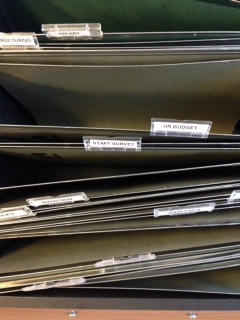
Much the same as any other filing cabinet, you might think….and of course you’d be right! The difference is though, that this empty filing cabinet symbolised a bold move to a wholly different way of working and the start of a genuinely exciting journey for my workplace, the creation of a truly digital hub to coincide with our office move. I am belatedly making good on my promise to blog about it.
The premise was simple. A small number of functions were designated as ‘fixed desk’ workers, for example the telesales teams, who clearly benefit from being office based in a competitive, encouraging environment and enjoy doing so and they moved ‘as is’ with no issues. Other than these functions, anyone could become a homeworker if they wished to and we had around 80 individuals opting to take this choice. All other staff, became by default flexible workers, meaning that they could work from home, from the new office or another alternative location, whenever they chose to, with no requirement of management approval or agreeing working patterns. We very deliberately chose to trust people and treat them as the adults they are.
Let me tell you first what there wasn’t: there were no weighty policies, there was simply a principles document, outlining what I have described above. There was no requirement for management and HR approval or consent, for either homeworking or flexible working: there were simply some basic technical requirements to become a homeworker, for example a minimum broadband speed and health and safety assessment and a clear message that all staff were able to work flexibly. There were no designated offices for anyone at all in the new building, there were no specific desks for individuals, there were no pedestals at the desks, no vast storage capabilities available on site.
But there was investment: investment in laptops, so that staff could work flexibly in the way that we had promised them and investment in digital archiving and online tools to help people communicate more effectively and share documents as needed. There was a system put in place so that people could book desks online, up to a week in advance and plenty of meeting rooms that could be booked and informal meeting spaces, for more ad hoc conversations. There were lockers made available for personal belongings and broad ‘neighbourhoods’ created so that teams could choose to sit with others in their division if they wished to. There was a simple process to access a net payment for those individuals setting themselves up as homeworkers. There was lots of training for managers and for staff on why we were implementing these changes, what the new environment would be like, how to manage in periods of change and uncertainty, what the new parameters were. There was a huge amount of hard work, commitment, enthusiasm and willingness to change, to give something different a try, to trust, to empower.
There have been bumps along the way on this journey, of course there have. But actually, those bumps have been surprisingly few and far between. We have been in our new digital hub and operating our new way of working for over six months now, and the feedback from staff has been overwhelmingly positive. The open plan environment has energised people, the opportunity to work in a truly flexible way and to be trusted is highly prized and valued. The hard and fast metrics will become clearer over time but so far turnover is down, productivity remains good and people are far happier. For us, it is the first step, but undoubtedly a hugely significant one, which is likely to change how we perceive the working environment and our approach to flexible working for good.
Businesses talk a lot about making changes to how people work, to empowering and trusting staff. It has been an absolute pleasure and a privilege to be part of the team that has led the transformation to a completely different way of working and challenged the existing norms. Why is it that we assume people are working harder if we can see them sitting at a desk? That if they are empowered to manage their own time, they will skive off? Do we really need to resort to command and control to get the best out of people? And if we can change how people work and interact with each other, what else can we do and let go of to make work even better? Now that really is food for thought!
Questions? Comments? I’d love to know what you think :).
Networks
Posted on: July 17, 2014
- In: ConnectingHR | Friendship | HR | Networking | Twitter
- 4 Comments

Networks are funny things, aren’t they? So often people bemoan networking and how hard it is to forge a connection with people, whether that is on a personal or a professional level. Too often there is a cynicism of wondering what someone else may want from you, or the fear of finding yourself stuck with someone who can’t resist giving you a hard sell for their products, or simply not finding the other person of interest. Too often all those potential pitfalls are genuinely the reality.
I’ve learnt a few things about networks over the past couple of weeks. Firstly, that you should build one when you don’t think you really need it and instead spend time figuring out how to contribute to others in your circle that could benefit from any expertise, support or help you can offer, however small and insignificant it may seem to you. The chances are, it won’t feel that way to whoever is on the receiving end.
Secondly, social media can be an amazing place to forge connections with people. Sure, you have to engage and be yourself, be inquisitive and share experiences, but when it works, it is so powerful. The HR and professional networks I have made through Twitter have formed into strong friendship in many cases and unstinting, consistent, solid support in countless others. ConnectingHR really did transform my professional network and continues to do so and boy, am I grateful!
The third thing I’ve learnt about networks? When you have a good one and when you need it, it’s amazing. Thank you to all of those people in mine who have been extraordinarily generous with their time, resources, contacts, offers of help and thoughts. It is hugely appreciated.
My blogging hiatus is over….as of today, I am back in the game!
Marathon ladies
Posted on: April 28, 2014
- In: HR
- Leave a Comment
Flora and I have written a joint post for our joint marathon endeavour!
Respecting the Distance
Posted on: March 2, 2014
- In: Running | Training
- 3 Comments
It’s 5 weeks to go until the Brighton marathon…and there continues to be lots of learning and personal development in all of the marathon training. Annoyingly, many of the lessons I am having to learn several times over, but am still determined that I will put the changes into place for next time around, for the next week, next day or the next run…after all, that is what training is all about isn’t it, learning to do things differently.
I started February having completed a 14 mile run, which at the time was the longest I had ever done…by the last day of February I had clocked up over 120 running miles in the shortest of months and finished the second 20 mile run in the month. Even to me, that sounds pretty good! The month has definitely had highs and lows though: I have certainly experienced cumulative fatigue from the long training runs and generally a lower level of energy overall than I enjoyed in the early days of training. Again and again I have learnt the power and importance of good nutrition and eating properly….more often than not, by getting it wrong and struggling in the long distances!
Marathon runners talk about respecting the distance of 26.2 miles, and I am finding that equally true of the long training runs. If I haven’t prepared for a long training run properly, if I haven’t eaten the right food in the days leading up to it, if my head is not mentally in the right place and if I am not fully rested and well hydrated, sooner or later I will struggle. I managed to demonstrate this (not so) admirably when I ran 20 miles with Flora on Friday: from 15 miles onwards, my communication and conversation dipped lower and lower until all my energy was consumed with just keeping going and not giving up. It was a tough run, made tougher than it had needed to be by inadequate preparation on my part. The lovely Flora was a complete star and kept chatting away to me (we joked afterwards about ‘Flora Radio’!) and definitely gave me more than she received in support on that particular run! The main thing though, is that we did it, however imperfectly on my part…and onwards and upwards we go. We’re definitely getting to know each other very well through completing this adventure together too… 😉
Big smiles after finishing 20 miles!
There is another distance that I need to remember and respect too though and it is one that I often forget about: the journey I have travelled in the last 21 months from complete, resolutely determined non-runner into a very-nearly marathon distance runner. I honestly never thought I would be running a marathon and I feel both hugely proud that I have got this far and quietly confident that I will be able to complete the journey. That’s another positive thing to think about while clocking up the miles in the final few weeks!
I’m raising money for Mind the mental health charity and Flora is running for the MS Society…if you are able to sponsor either of us, please click here. Thank you so much for the wonderful support.
Ripples and Waves
Posted on: February 18, 2014
- In: HR | HR for Mental Health
- 6 Comments

All of our actions have an effect. Often we don’t know how strong the effect will be until the action has been taken for the first time: whether it will be a small pebble, slipping almost unnoticed into the water’s smooth surface, whether it will be a stone skimming across a lake creating a series of ripples, or whether the ripples gather momentum to form a wave, shifting the landscape around us and our sense of what impact our actions can have.
The beginning of this story is known to most of you. I published a guest blog in January last year, we held an HR for Mental Health event. For me, it has always been not so much those early actions which matter, the short-term reaction to the events that unfolded, but whether and how I can use those actions and the experience to effect tangible change in the business that I work in, even in the smallest of ways. Pressing ‘publish’ on the original blog post was never going to be enough on its own.
We’re now a year on and I’m proud that there are some concrete things that I can report, some ripples that have been created. In early January, my learning and development team and I met with Jon Bartlett to discuss how we could include aspects of mental health and wellness into our management training. Early next month, they, I and another HR colleague are hosting and attending Jon and Charlotte Walker’s (@BipolarBlogger) first Mental Health First Aid training course across two days. Next week, there is a one day mental health awareness course being facilitated for the Heads of HR across my wider organisation, to open a dialogue about the topic, to demystify it and to start to plan what steps and actions we will take elsewhere in the business, however small. I have had some positive conversations about incorporating it into our overall corporate responsibility programme and have been asked to report on what we have done to date and what more is planned.
Ripples start small but they build up, have a cumulative effect. I have learned that if you want change to happen, if you care enough and are in a position to have some influence, sometimes you have to be the one to keep pushing the change, to embody the change and to be the one that continues to bring it up and find a way to make it work. It’s taken me much longer than I might have imagined a year ago, to start to make those ripples and work towards making a wave on my home territory. The important thing though is that it is happening now.
So that’s me, a year on. How about you? And if you are where I was for ages, starting to start conversations, or even just thinking about starting them, knowing that you want to do something more and that your organisation is potentially willing, or might be given the chance….how can I help?
Once you start to make a ripple, it can go a long way… 🙂
Highs and Lows
Posted on: February 14, 2014
- In: HR
- 5 Comments

Last time I wrote about progress, having run 14 miles, further than I had ever run before. In my head, I know I am still making progress, even more so than previously, as my long run last Sunday reached the once unimaginable length of 17 miles and I felt OK afterwards. And yet, and yet….this marathon training is messing with my mind and sometimes it’s not the long runs, but the short ones that seem a struggle. Runs where I try and fail to match the pace of the group. Runs where I feel sluggish and slow and can’t seem to propel myself forwards fast enough. Runs where I feel like I am just getting slower, despite all of the hours and miles I am putting in. Runs that leave me feeling bruised and disheartened and inadequate.
Of course, there are a million different reasons for this. I was tired, I didn’t fuel myself up adequately, I’m running with a faster group. It doesn’t change the fact that it feels tough. I know progress isn’t always linear, that setbacks are inevitable in this journey to running a marathon. I also know that it doesn’t matter…to anyone but me…whether I fly round the course or plod at the pace of a tortoise. It’s the doing it that counts and the relentless, unforgiving preparation. But also not just this…it’s the fundraising for an amazing charity, the personal challenge and achievement of doing something I have too often dismissed as impossible, that is the real lasting jewel here, the sense in the apparently nonsensical. The thing that really matters.
So, I had a bad run today. But, no one died. No one would have cared, apart from me, were it not for the fact that it made me upset afterwards. It doesn’t matter, because I will run again another day and next time it will be different and better. Running and marathon training brings with it highs and lows…yet also great learnings in the power that the mind exerts over the body in what is and isn’t possible.
There are 52 days between now and the Brighton marathon on 6th April. I say bring it on!
If you would like to sponsor me in this crazy endeavour, the link is here https://www.justgiving.com/Alison-Chisnell/

 The HR Juggler